Table of contents
Telescopic poles have revolutionized the way forestry and clearing tasks are approached, making challenging jobs safer and more efficient. These versatile tools unlock new possibilities for professionals working in dense woodlands or managing overgrown landscapes. Explore the transformative impact telescopic poles have on modern forestry and clearing equipment, and discover why they have become indispensable in the field.
Extended reach and accessibility
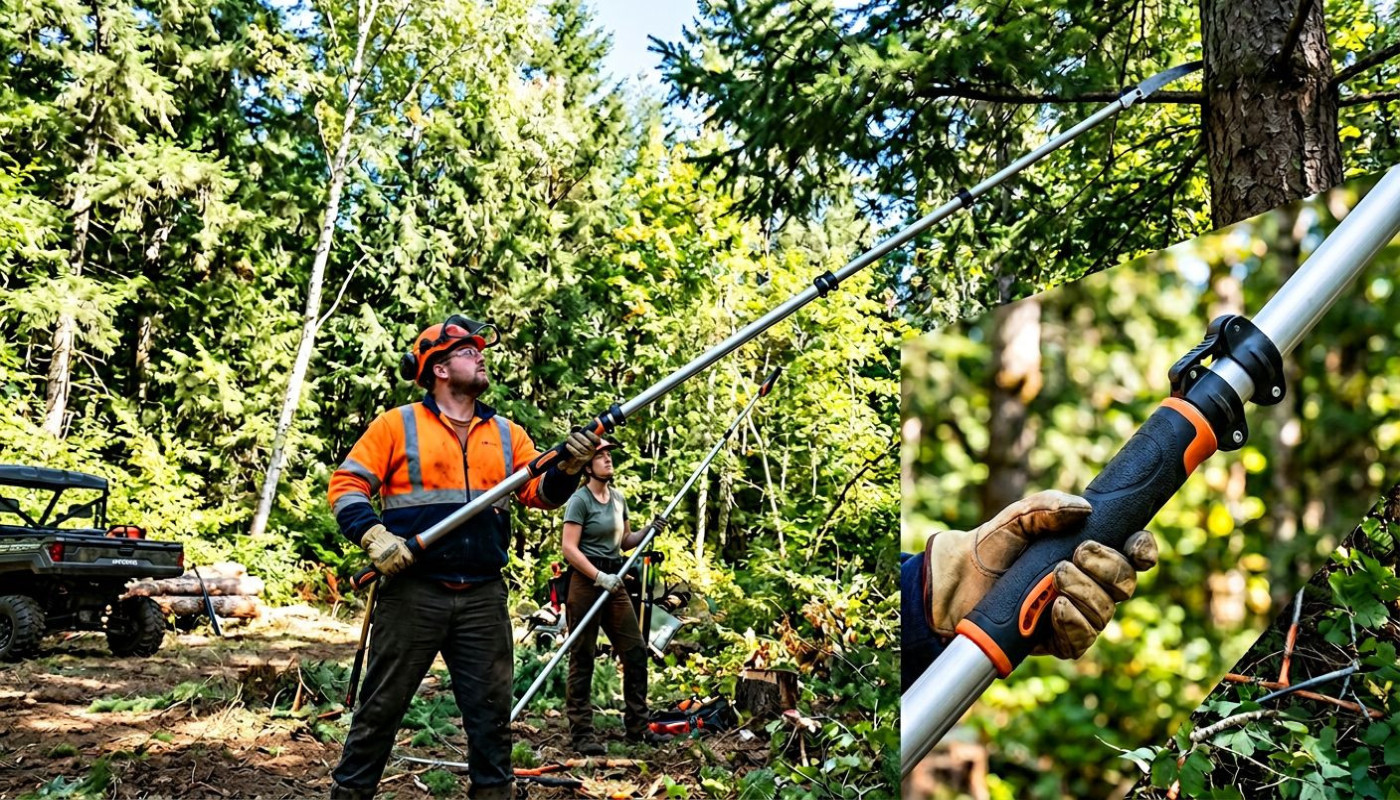
Telescopic poles significantly improve extended reach and accessibility in forestry equipment, transforming how workers manage safe tree trimming and clearing tasks. By utilizing a telescoping mechanism, these tools allow forestry professionals to precisely adjust the length of their pole saws, pruners, or clearing tools. This adjustability minimizes the reliance on ladders or climbing, directly lowering the risk of falls or other accidents during operations. With telescopic pole benefits, operators can easily target high branches or dense foliage, even in challenging terrain where traditional methods might be hazardous or impractical.
Accessibility is dramatically enhanced when using telescopic poles, as workers can navigate around obstacles and reach over or through thick undergrowth without physically entering potentially unstable or unsafe zones. The technical design of these poles ensures stability and control, which translates to better accuracy and less fatigue for the user. The combination of improved safety and increased task efficiency makes telescopic poles a vital component in modern forestry equipment, supporting both productivity and the well-being of forestry teams during demanding fieldwork.
Enhanced operator safety
Telescopic poles significantly elevate operator safety within forestry and clearing equipment operations by allowing ground-level operation, eliminating the need for workers to climb trees or access unstable surfaces. This approach minimizes exposure to common forestry hazards such as falling branches, unstable ladders, and uneven terrain, directly supporting injury prevention. With the use of telescopic pole safety systems, operators maintain a secure distance from dangerous heights, which not only reduces workplace accidents but also streamlines compliance with fall protection standards imposed by regulatory bodies. Employing such tools helps organizations align with stringent operator safety guidelines and diminishes the risk of costly incidents or violations. In effect, integrating telescopic poles into forestry workflows acts as a proactive measure, fostering a safer environment by keeping personnel grounded and lessening their vulnerability to avoidable injuries.
Increased work efficiency
Telescopic poles play a pivotal role in boosting work efficiency within forestry and clearing environments by streamlining various tasks and minimizing the physical demands on workers. Their telescopic extension capability allows operators to reach high branches or dense vegetation without repositioning ladders or climbing, which not only saves time but also reduces the risk of strain-related injuries—a direct benefit of improved ergonomics. Compared to traditional forestry tools, the quick adjustment and lightweight design of these poles enable crews to move seamlessly between tasks, significantly cutting down on setup and breakdown times. This transition leads to observable labor savings and elevated productivity, as workers spend less energy on manual efforts and more on precise, task-focused operations.
Adaptability to varied environments
Telescopic poles stand out as adaptable equipment, meeting the demands of diverse forestry environments and clearing scenarios. Their extendable design enables workers to operate efficiently in both dense woodland and urban landscapes, ensuring access to hard-to-reach branches or tangled undergrowth without the need for ladders or scaffoldings. The true value of these multi-purpose poles lies in the integration of modular attachments—tools such as saws, pruners, and clearing blades can be quickly swapped depending on project requirements. Such telescopic tool versatility transforms standard forestry tasks into streamlined clearing solutions, helping users address challenges like overhanging branches near power lines or invasive vegetation in restricted spaces.
Compatibility with different modular attachments not only maximizes productivity but also enhances workplace safety. Operators can tackle various tasks from the ground, reducing exposure to hazards associated with climbing or using unstable platforms. In urban forestry management, telescopic poles allow for discreet and precise intervention, minimizing disturbance to the surroundings and promoting efficient vegetation control. The adjustability of these tools ensures that both professional arborists and municipal maintenance teams can respond rapidly to changing site conditions or unexpected obstacles.
As forestry operations evolve, the demand for telescopic tool versatility and adaptable equipment continues to grow, supporting both traditional woodlands and new urban projects. For those seeking practical clearing solutions or wishing to explore the latest in modular attachments and multi-purpose poles, more tips here showcase relevant innovations and guidance for forestry and maintenance teams.
Reduced environmental impact
Telescopic poles play a pivotal role in lowering the environmental impact of forestry and clearing operations by enabling tasks to be completed with minimal disturbance to natural habitats. By extending reach without requiring large, heavy machinery, these tools support low-impact forestry and help maintain the integrity of sensitive ecosystems. Using telescopic poles lessens the risk of soil compaction, a process where heavy equipment compresses the ground, restricting root growth and water infiltration. This soil preservation is fundamental in safeguarding plant health and promoting ecosystem resilience. In small-scale projects, such as selective tree pruning or invasive species removal, eco-friendly equipment like telescopic poles allows for precise work with limited footprint. On a larger scale, sustainable clearing practices utilizing these tools reduce the need for multiple passes with machinery, thus minimizing long-term damage to forest soils and promoting ecological balance. Employing telescopic poles aligns with best practices for sustainable forestry, ensuring that both productivity and environmental stewardship are maintained.
On the same subject

Exploring The Impact Of Technological Advancements On Daily Life

How Governance Disputes Impact AI Development And Innovation?

Understanding the Digital Innovation Impact on Businesses in Asia

The Science Behind the Popularity of Free Spins in Online Gaming

What criteria should you use to choose a good web host for your website ?

How to use a chatbot to generate qualified leads for your company?

What are the characteristics of a good laptop charger?
